

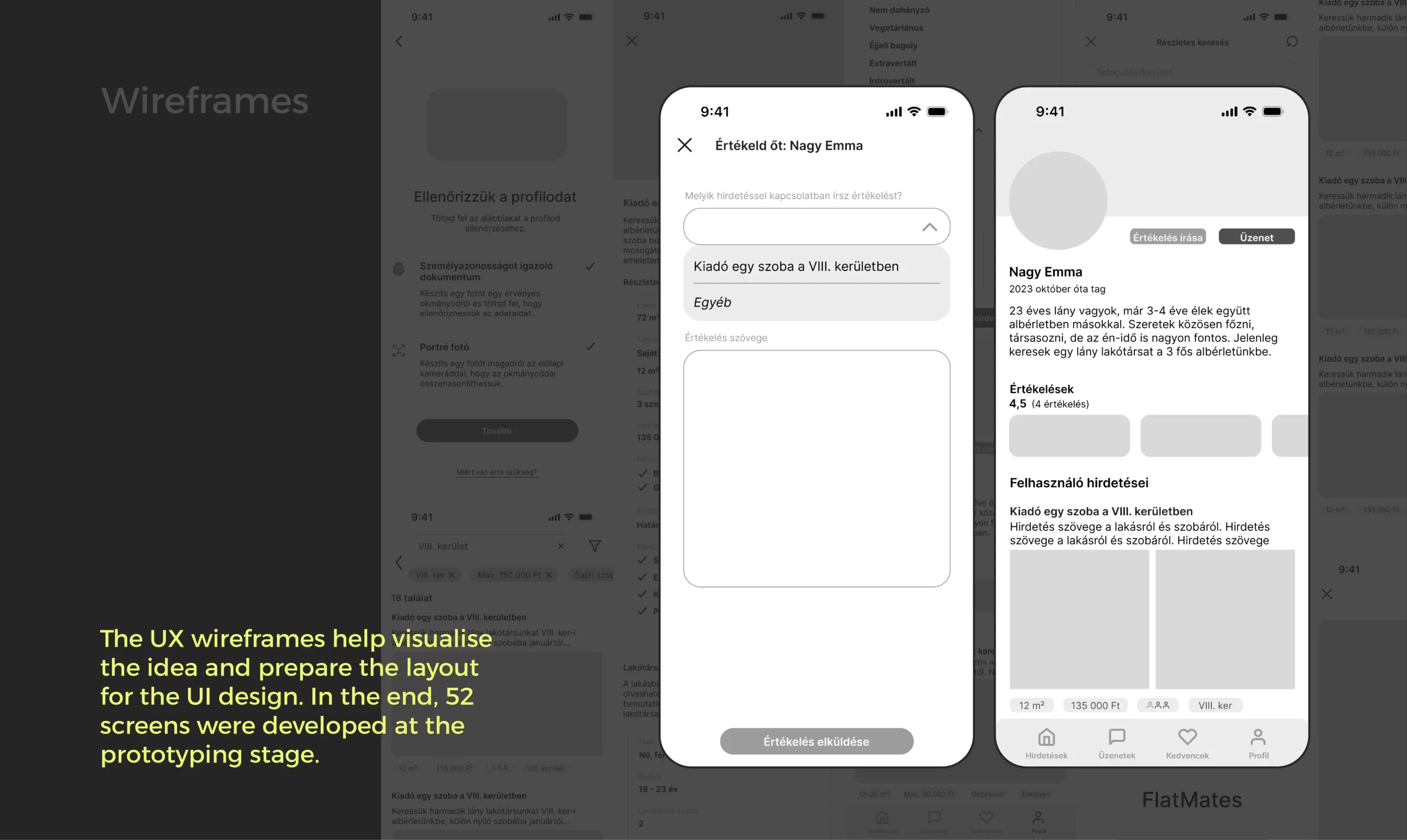

Flatmates is a mobile application designed to help young adults find reliable flatmates or rooms in shared apartments, especially in large urban areas. This project was developed from the ground up, starting from the initial concept through UX research, wireframing and visual UI design.
It addresses a real-life challenge experienced by many in my own demographic: students and young professionals aged 18–25, who face difficulties when entering the rental housing market.
The app aims to create a smoother, safer, and more community-driven rental experience.
Concept
What: An app that helps you find a flatmate, a room to let or a rental at the same time, combining the best features from real estate platforms and social media.
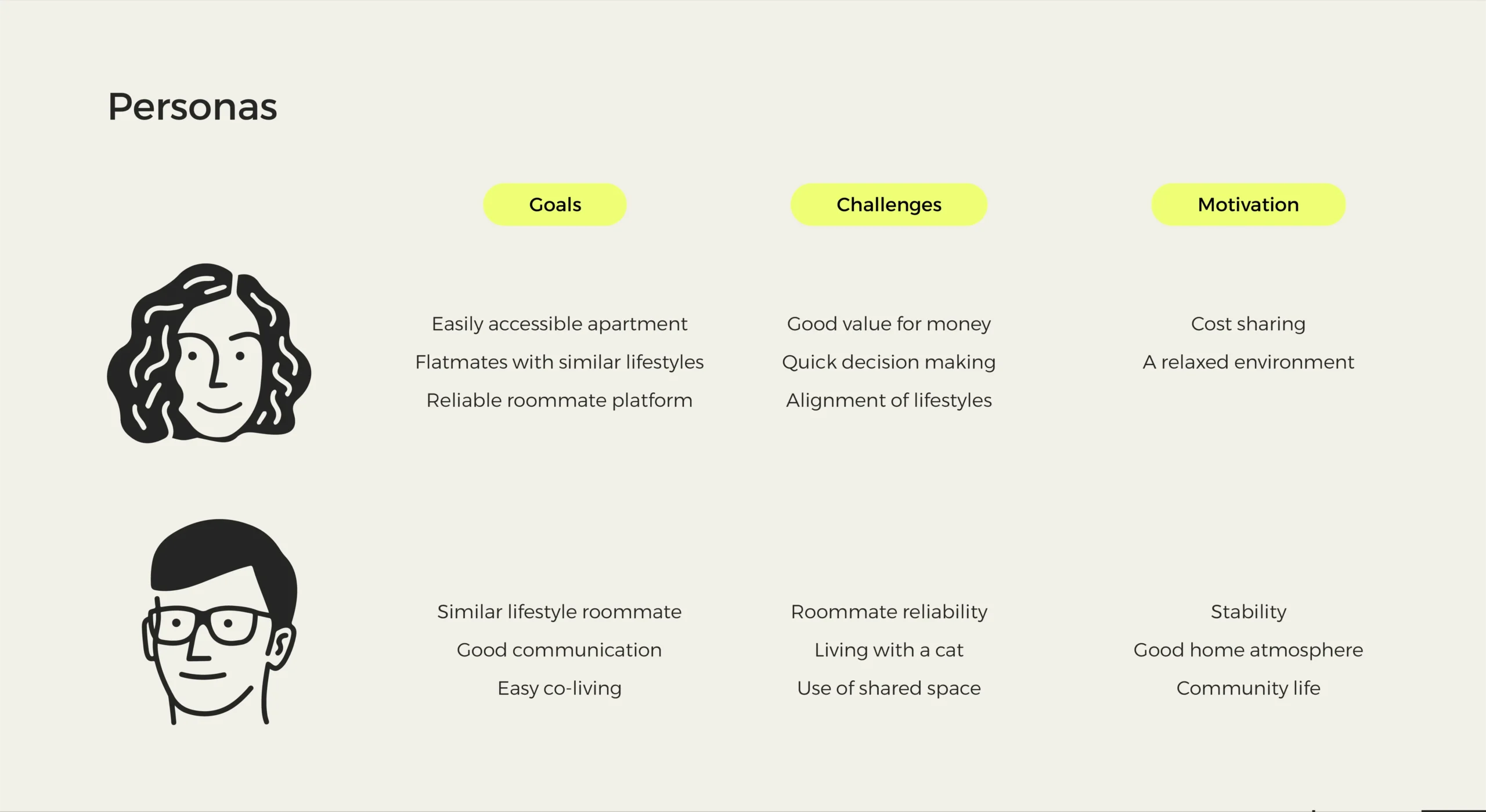
For whom: Young adults, students, those looking for a room in a shared flat or for a flatmate
Goal: Connecting supply and demand in the rental market through a reliable and user-friendly platform.
Target Audience
18–25-year-olds
Students, young professionals
Planning to live in shared apartments
Budget-conscious users
Research
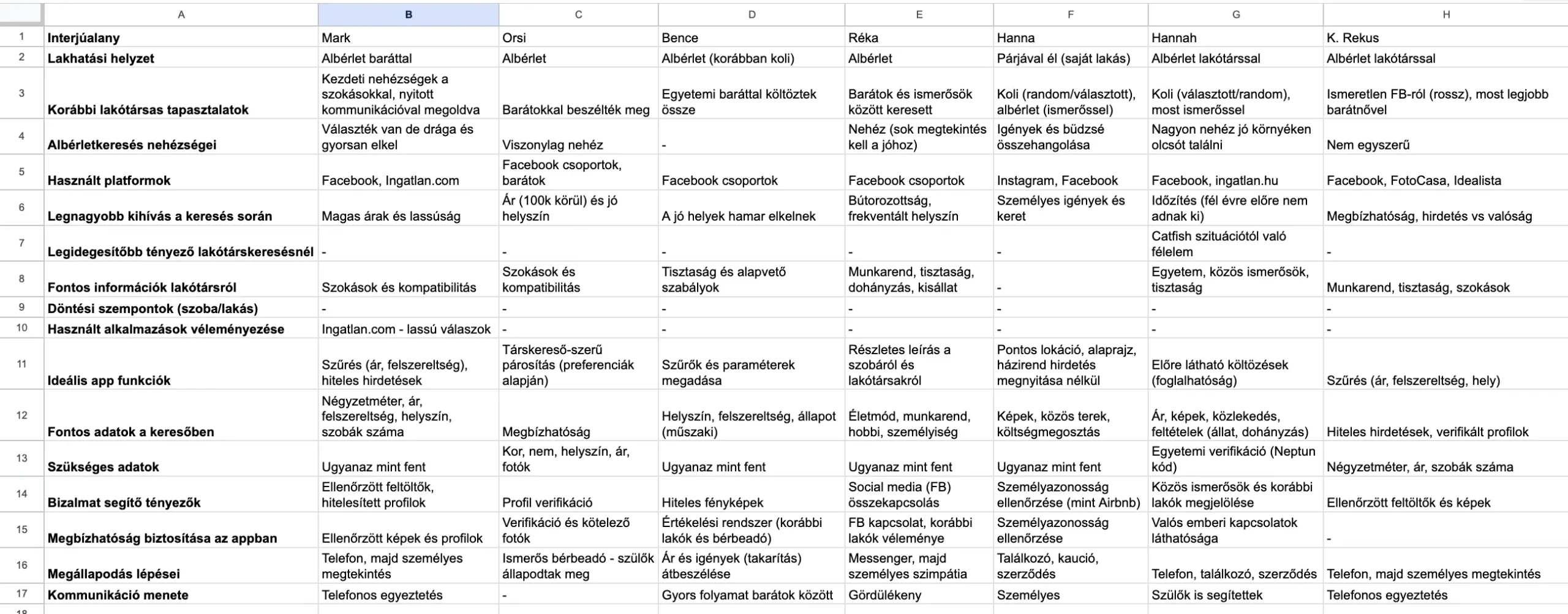
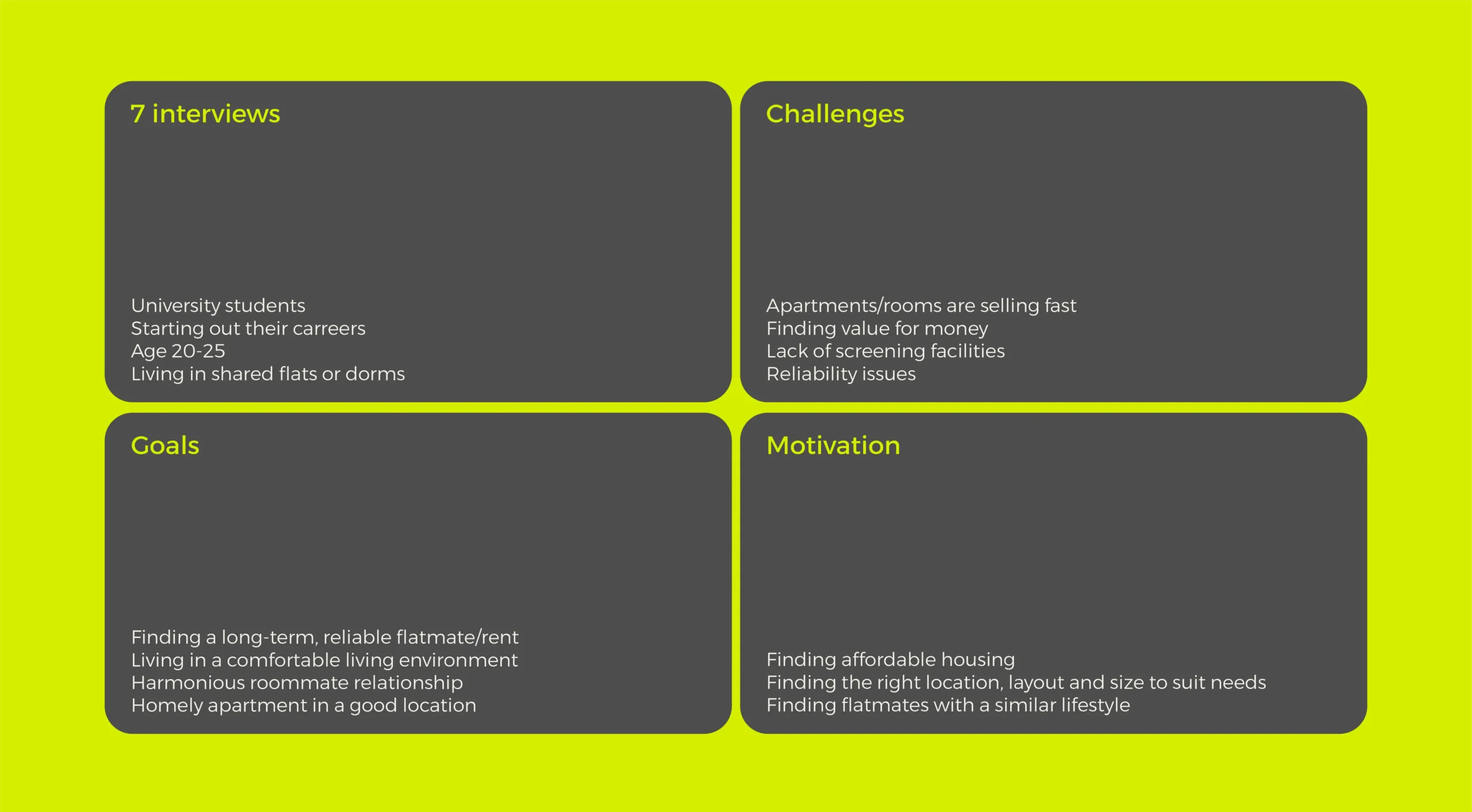
7 user interviews
Locations: Budapest, Pécs, Badajoz
Pain points
Rooms and apartments get booked quickly, creating urgency and pressure.
Financial constraints often limit access to high-quality housing.
Trust and reliability are major concerns in flatmate selection.
There is a lack of personalized filtering or lifestyle-based matching.
Competitor analysis
There is no existing platform in Hungary which includes the same features as Flatmates. There are options available which offer parts of Flatmates’ service such as Facebook Marketplace and groups, real estate sites and applications like Ingatlan.com. One competitor in German-speaking areas is WG-Gesucht.de.
UX goals
Simplify search process
Ensure trust via verified profiles
Enable lifestyle-based matching
Swiping-based navigation for quick interaction
Design approach
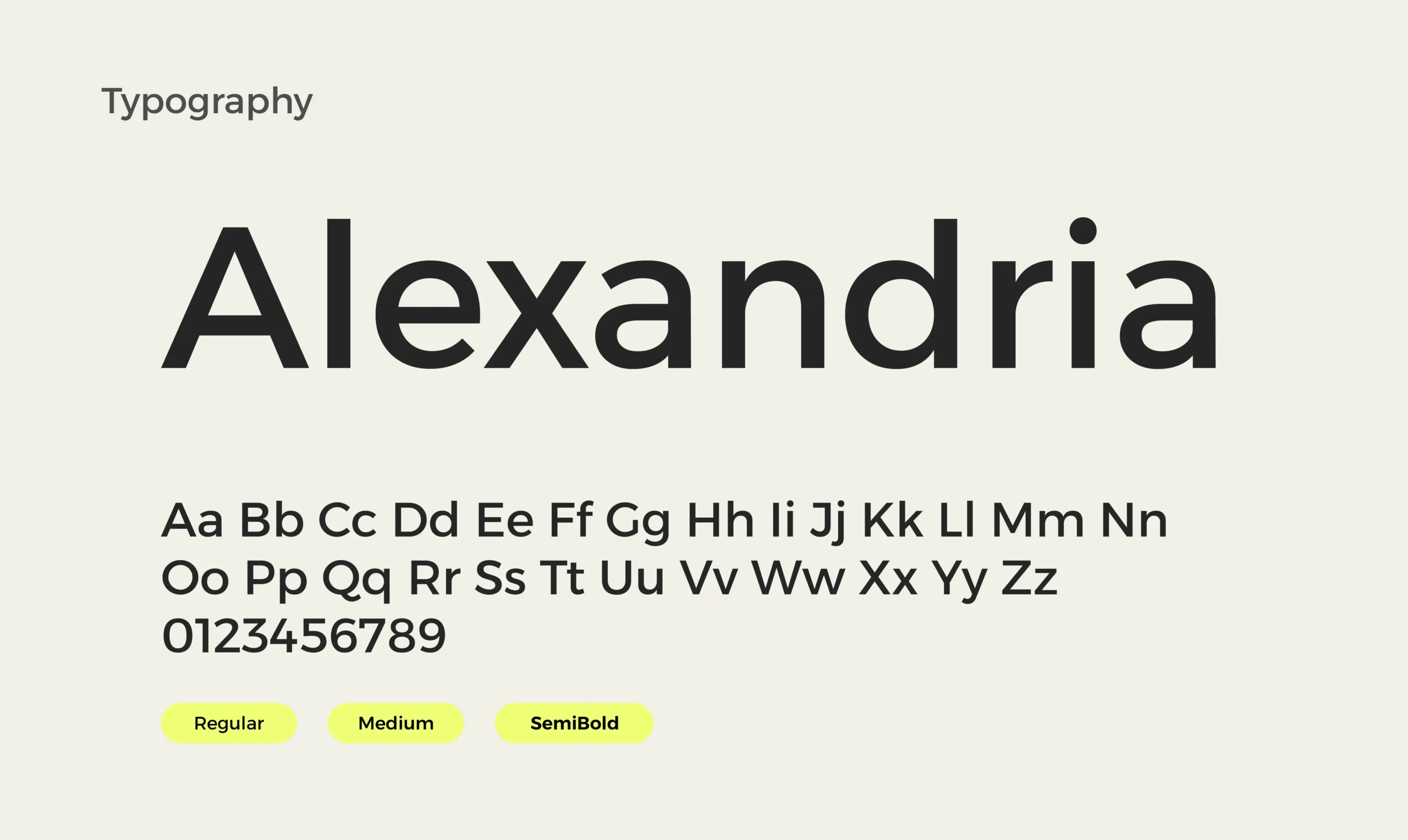
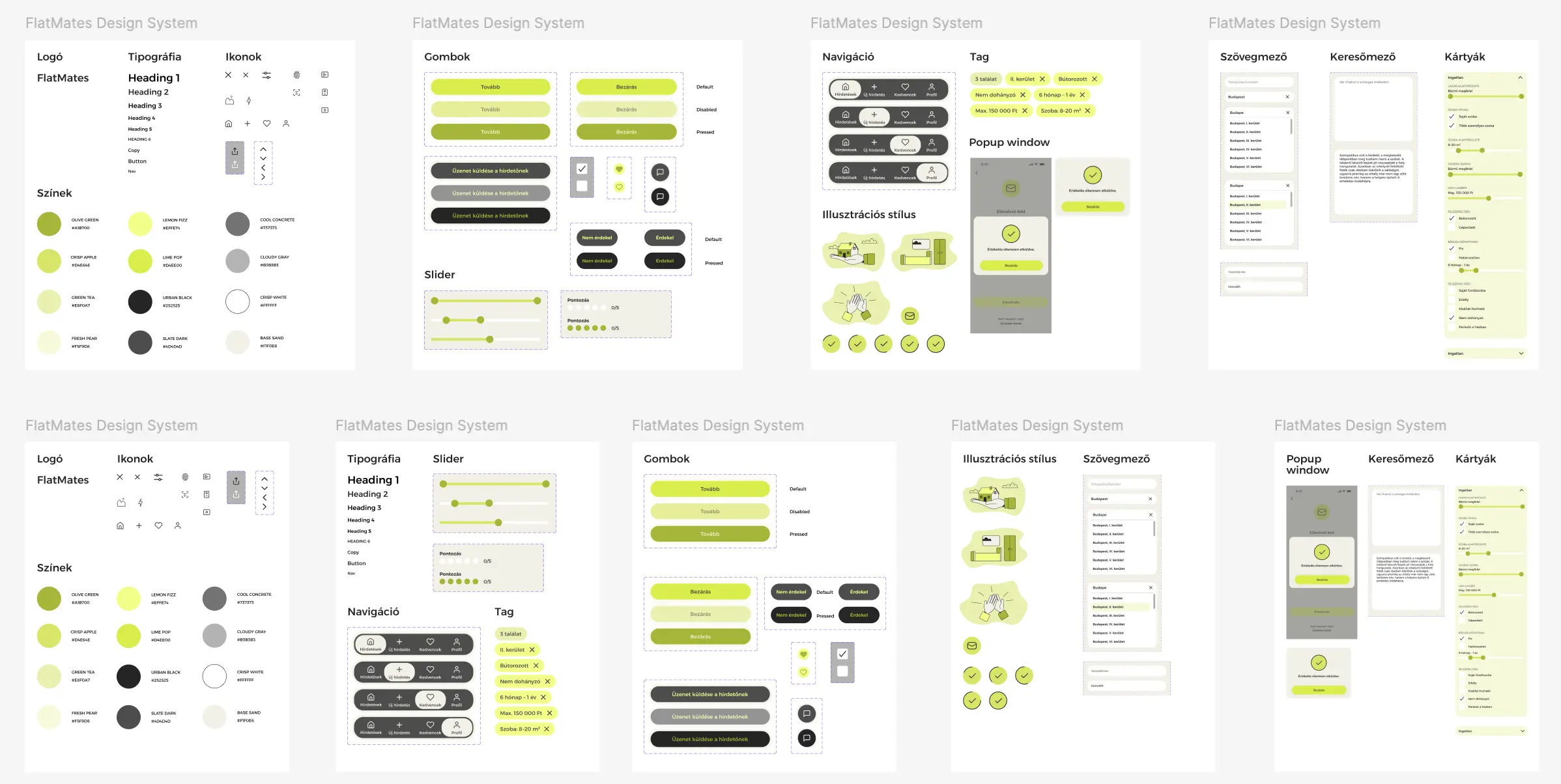
The UI is designed to be fresh, friendly, and trustworthy. A soft light green color palette reinforces calmness and security, while rounded components and clean sans serif typography improve usability and friendliness.
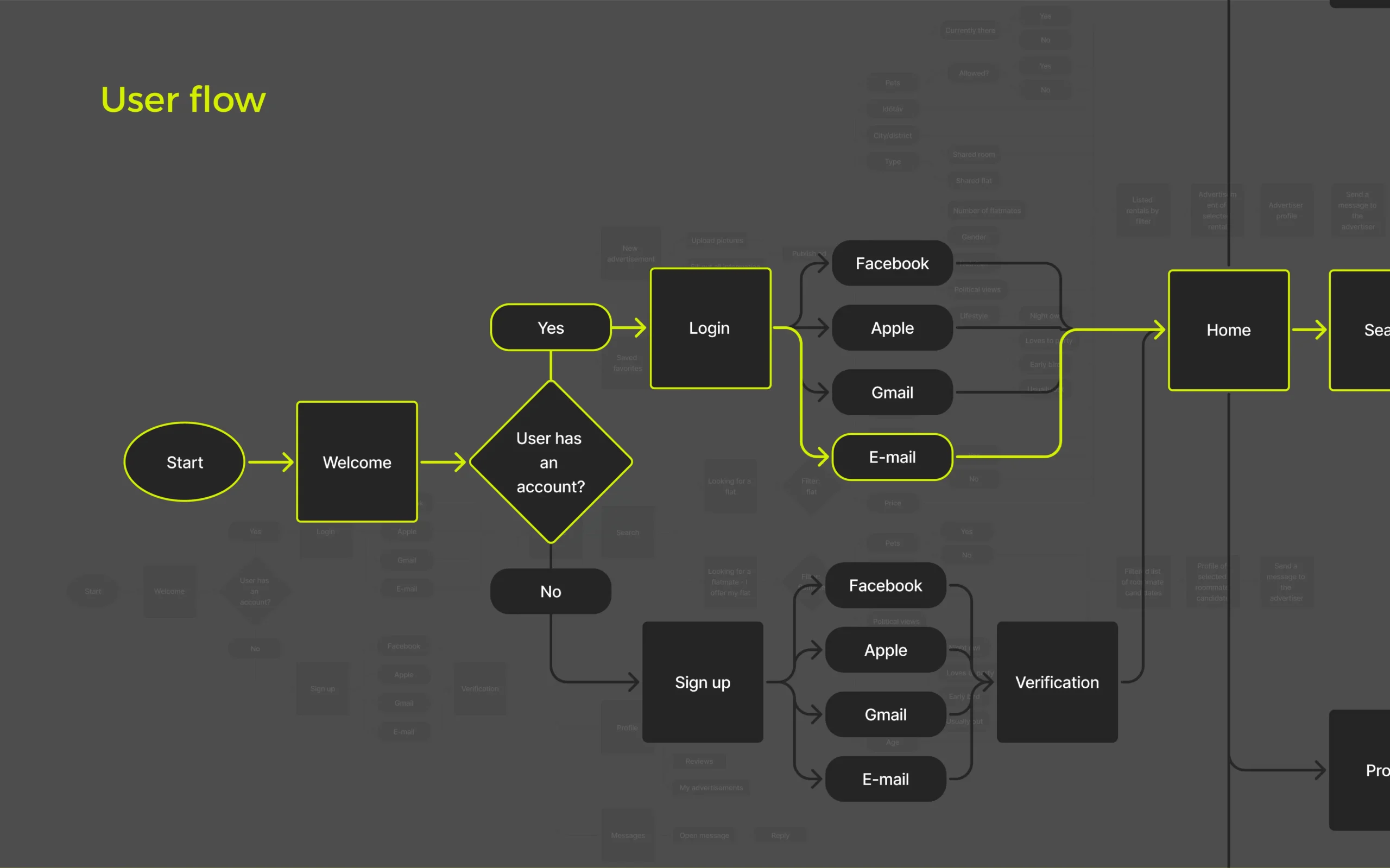
Interaction patterns are designed with familiarity and speed in mind. The app features swipe-based navigation for fast browsing, similar to modern social platforms, enabling users to like, skip, or connect with listings or people.
Key design highlights
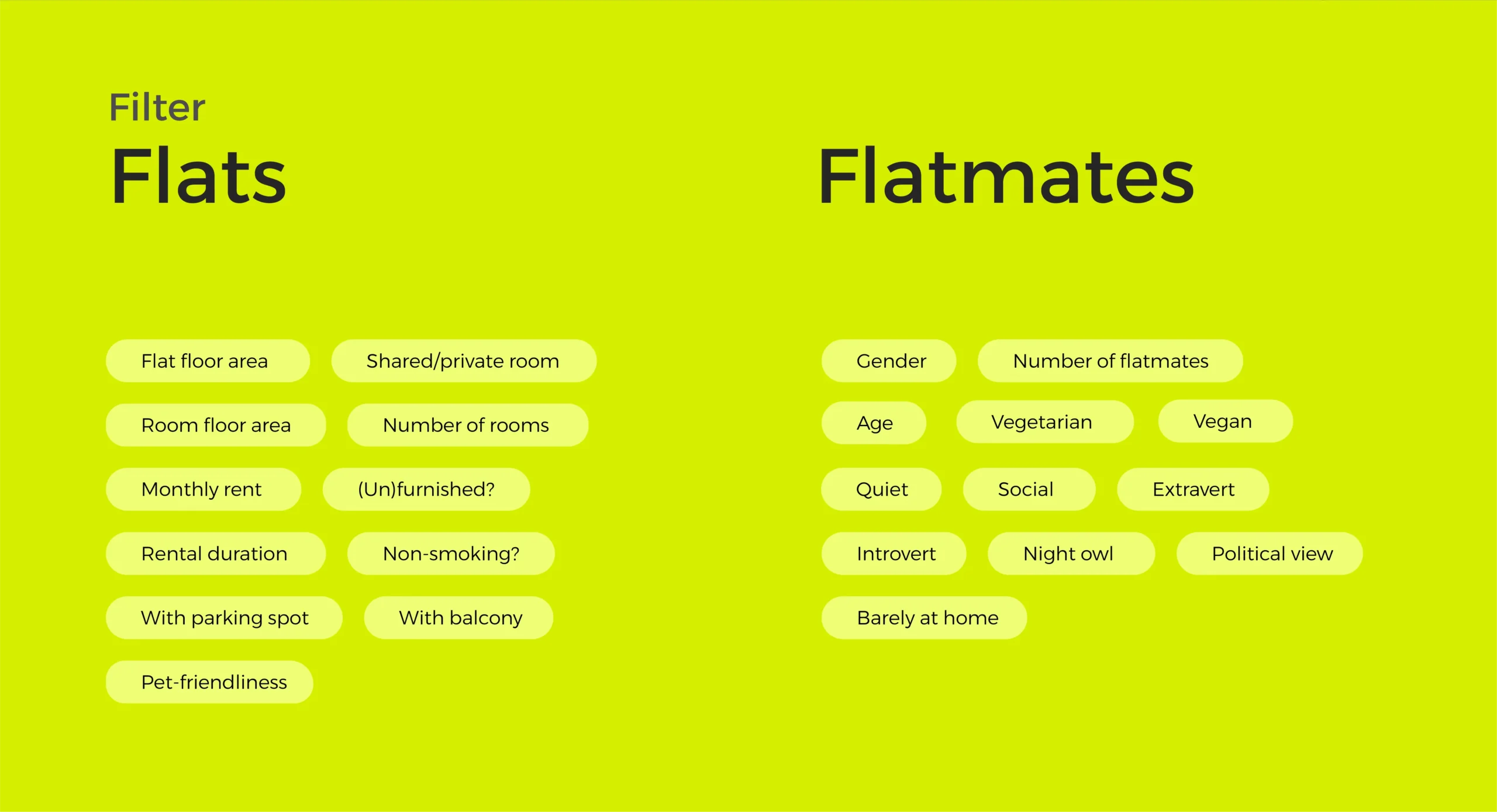
Matching logic that connects flat seekers with compatible profiles based on lifestyle and preferences.
Verified listings and users, increasing trust on both sides.
Smart filtering options to narrow down matches by location, budget, pet-friendliness, habits, and more.
Dual functionality: users can both search for rooms and post their own listings seeking roommates.
Conclusion
Flatmates is not only a design project but a solution born from lived experience. It allowed me to apply a full-cycle design process, from user research to interaction flows and visual identity. It also demonstrates my commitment to solving meaningful problems that impact my generation. This project expresses my belief that design should foster connection, comfort, and trust, especially in areas like housing, which affect our well-being on a daily basis.