
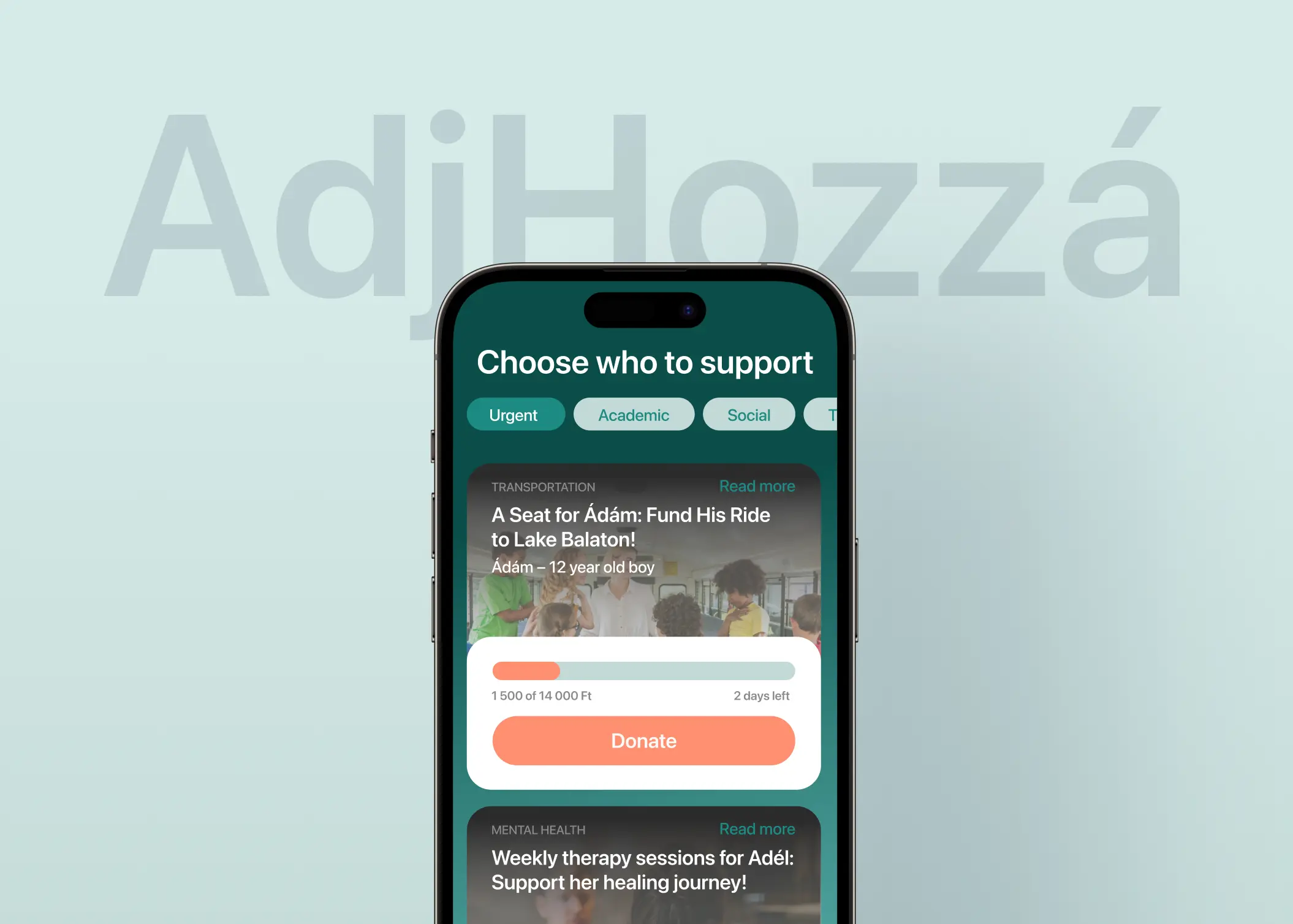
AdjHozzá is a micro-donation platform designed to help students in vulnerable situations to receive financial support anonymously, balancing trust, safety, and meaningful connection.
The problem
Disadvantaged students lack safe, stigma-free ways to ask for financial help
to ask for financial help.
Human layer
- stigma of asking for help
- fear of exposure
- vulnerability
System layer
- ack of trust in institutions
- fragmented support systems
- inefficiencies in fund distribution
The research
I combined desk research (EU statistics, Hungarian education system analysis) with qualitative interviews.
I spoke with mentored students in NGO programs, as well as teachers from public schools and after-school providers.
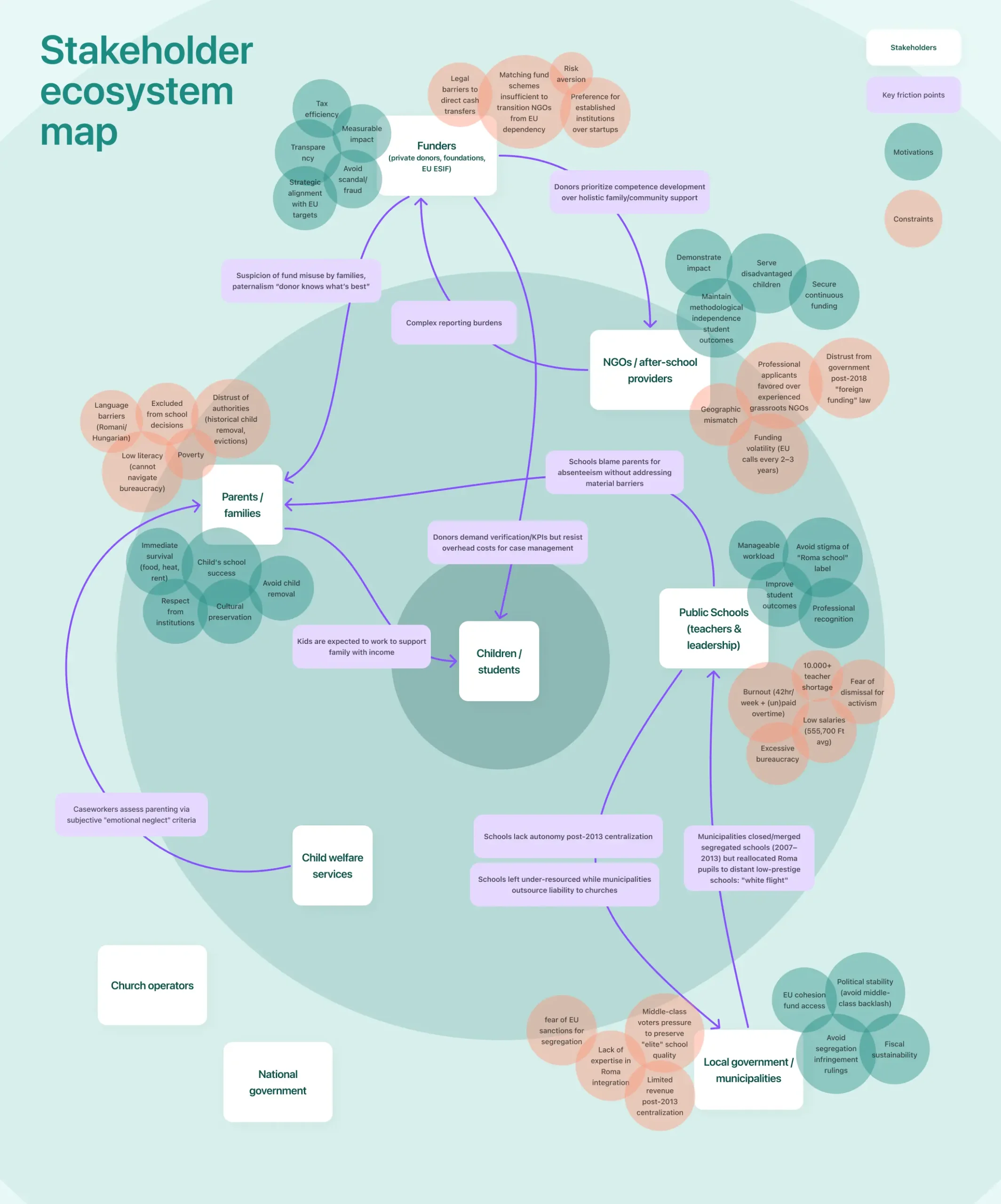
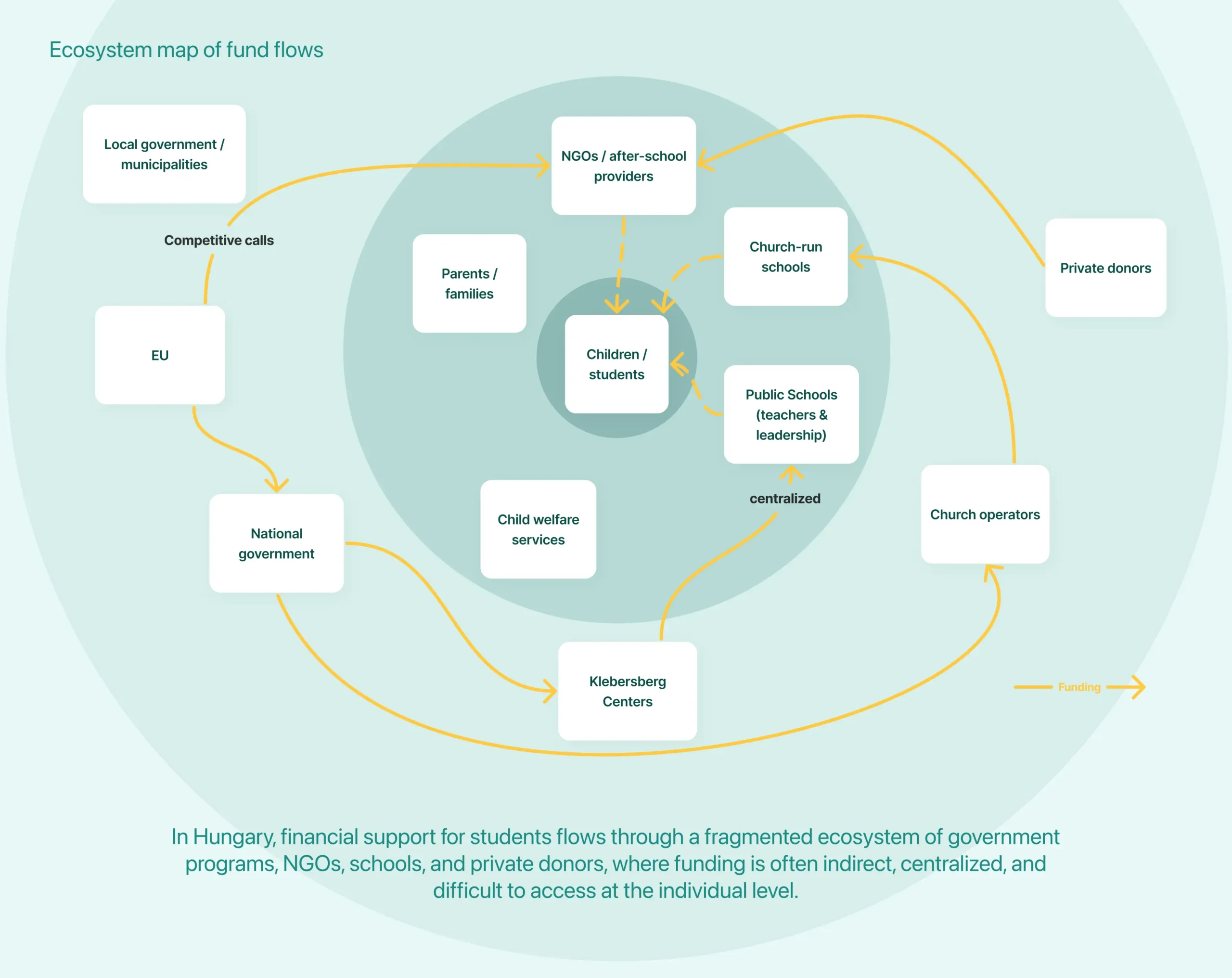
To understand systemic gaps, I mapped:
- fund flows in the Hungarian education system
- the student journey from primary school to university
- stakeholders in the ecosystem
This revealed where financial support breaks down and where students are most at risk of dropping out.
Key insights
- Asking for help is socially risky → anonymity is essential
- Trust is not assumed → it must be designed through systems
- Power imbalance affects how users engage (or don’t)
The solution
I designed a three-sided donation platform connecting:
- donors
- teachers
- case managers
How does it work?
A student asks a trusted teacher for help.
The teacher submits a request through the platform.
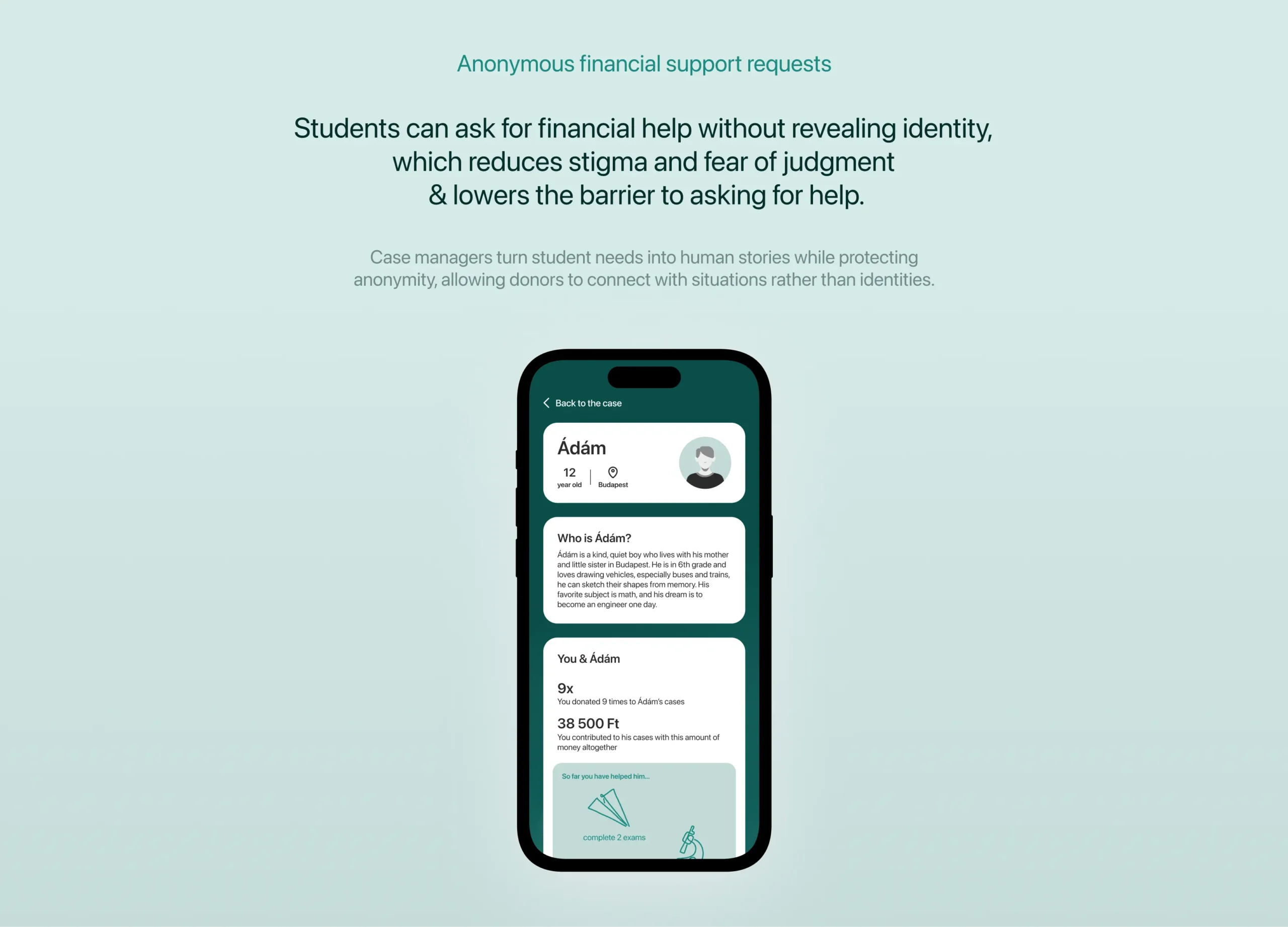
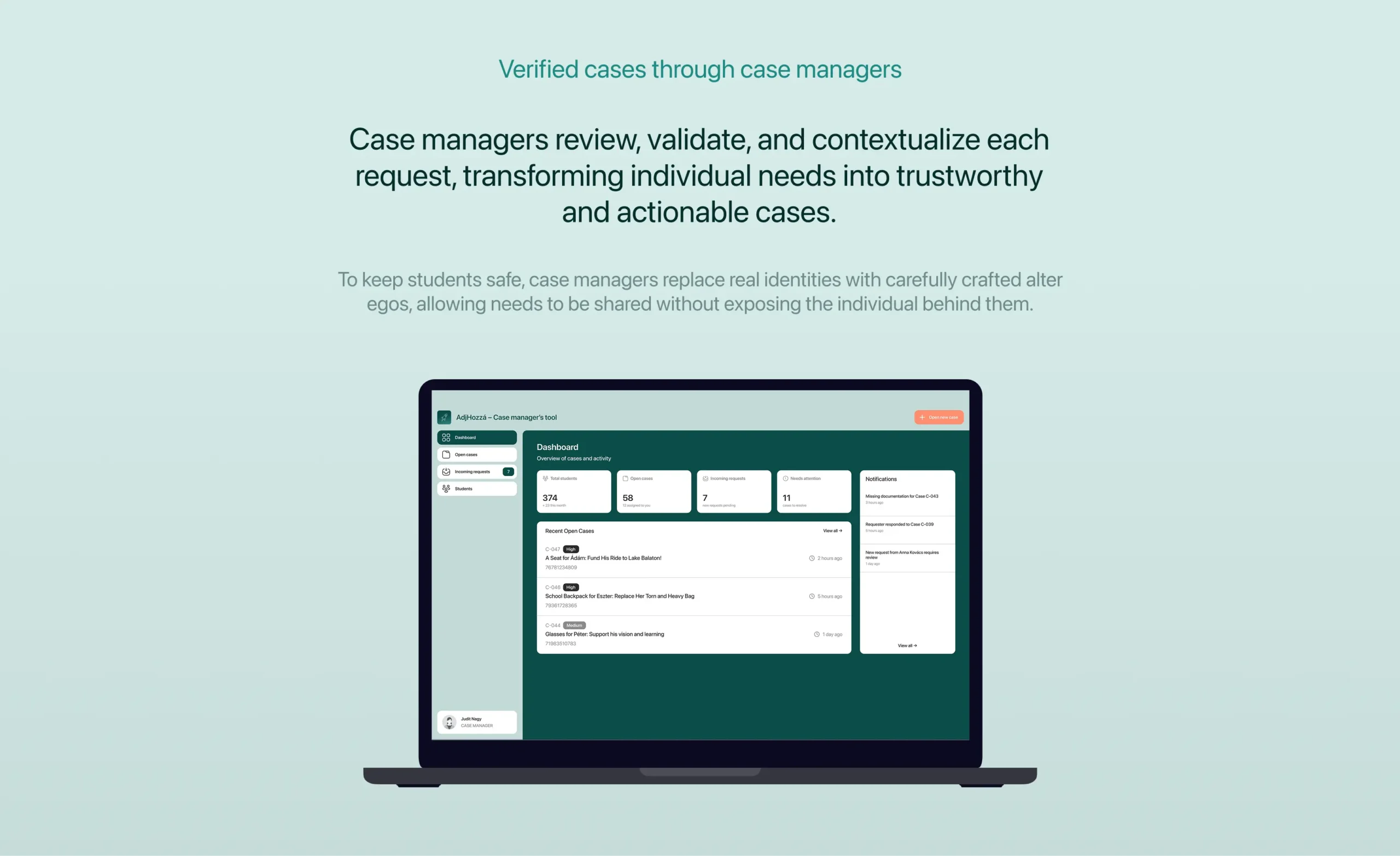
Case managers transform these into verified, anonymized stories.
Donors can browse and support specific cases directly.
Key features
- Anonymity by design: students are represented through system-generated identities
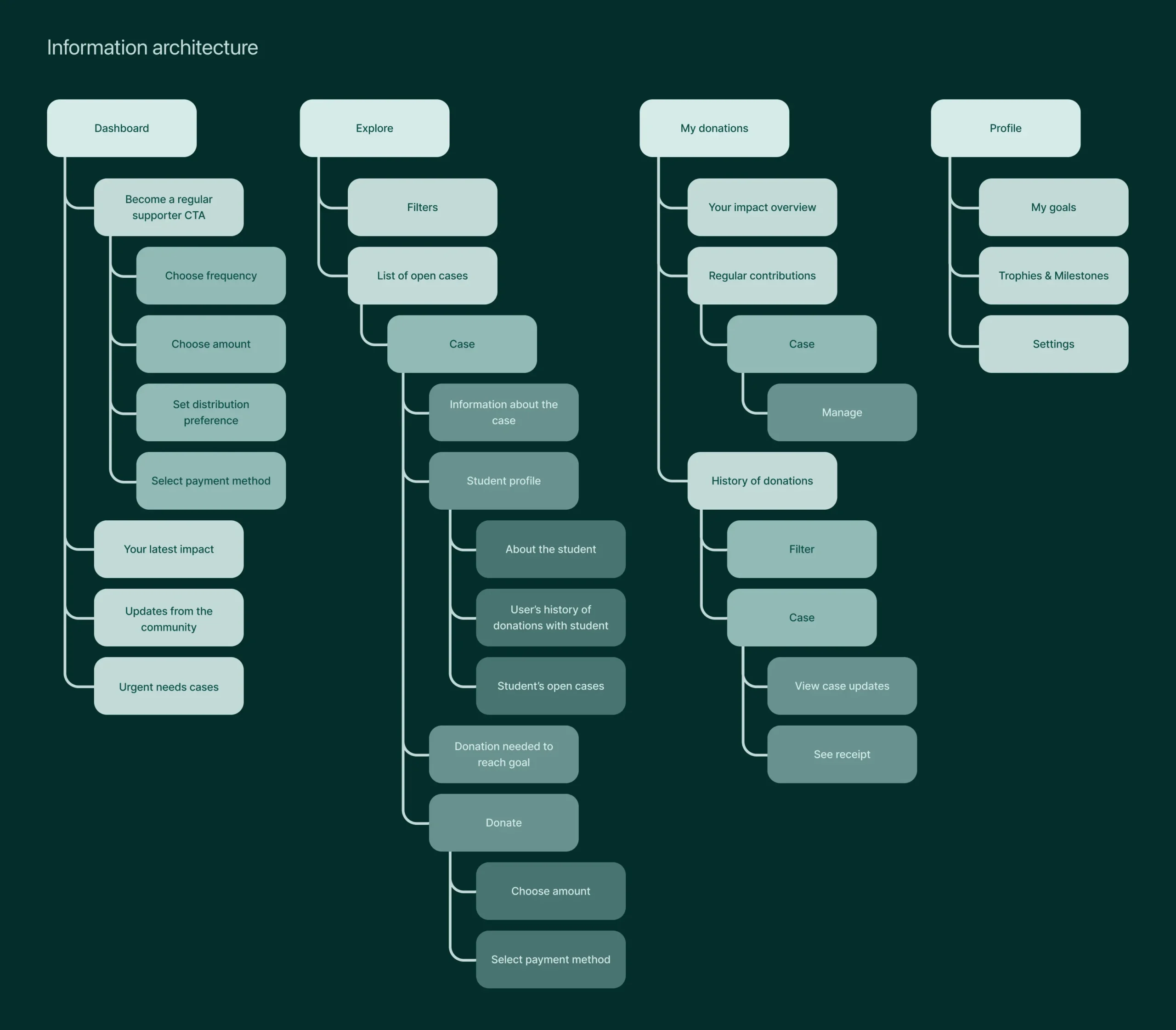
- Flexible giving: one-time or recurring donations
- Transparent tracking: donors can follow how funds are used, even beyond a case
Impact
Positioned the platform as a scalable model for education-based micro-financing
Reduced psychological barriers to asking for help by embedding anonymity into the core flow
Increased trust through transparent, traceable donation journeys
Bridged gaps between disconnected stakeholders (students, educators, donors)